For international SEO and Digital PR agencies, expansion into the Middle East and North Africa looks like a clear growth opportunity. A practical first step is to identify relevant regional media through an Arabic publisher database, then assess audience fit, topic relevance, and placement terms.
All PublishBridge placements are permanent: they stay live for as long as the publisher’s site is online, and if a publisher removes one, we republish it, move it to an equivalent site at no cost, or refund you in full. Every placement also carries a 100% indexation guarantee.
The region offers rising search demand, strong purchasing power, fast-growing digital adoption, and underserved competition in many sectors.
Yet despite the opportunity, many global agencies fail to generate meaningful SEO traction after entering Arabic-speaking markets.
Budgets are spent. Content gets published. Links are acquired.
But rankings stall.
Why?
Because most agencies apply Western growth systems to a market that requires regional precision.
This article explains the core reasons campaigns fail — and what agencies need to do differently in 2026.
The Arabic Market Is Not One Market
One of the biggest strategic mistakes is treating Arabic-speaking countries as a single audience.
They are not.
Saudi Arabia, UAE, Egypt, Kuwait, Qatar, Jordan, and Morocco each have different:
Search behaviors
Consumer language preferences
Trust signals
Media ecosystems
Purchase psychology
Content tone expectations
A campaign that performs in Egypt may fail entirely in Saudi Arabia.
Regional nuance is not optional. It is a ranking factor in practice.
Translation Is Not Localization
Many agencies translate English landing pages into Arabic and expect results.
This usually creates weak content because translation alone does not adapt:
Diagnose the Market Before Reusing a Global Playbook
When a campaign underperforms in an Arabic-speaking market, begin with evidence instead of assuming that the language is the only problem. Compare the target query with the landing page, inspect the search intent, review competitors that actually appear in the relevant country, and test whether the offer answers local questions. Check whether examples, pricing context, support information, and terminology are appropriate for the intended audience. The same Arabic wording can carry different commercial expectations across countries and industries.
Then examine the site’s technical and content fundamentals. Confirm that important pages can be crawled and indexed, page titles describe the content, internal links help users navigate topic clusters, and mobile templates work reliably. If the underlying page is slow, confusing, or mismatched to intent, adding publisher links alone will not solve the conversion problem.
Build Regional Authority Step by Step
Choose a focused group of topics that the brand can cover credibly and build supporting pages that answer distinct user questions. Use regional examples only when they are accurate, cite dependable sources for material claims, and identify the expertise behind the content. Then look for relevant publishers and industry sources that have a genuine reason to reference the work. A few well-aligned resources and editorial relationships are easier to defend than a broad campaign built around unrelated placements.
Publisher selection should consider audience and topical relevance, editorial quality, available evidence, link context, and clear commercial terms. Third-party authority metrics can support a shortlist but do not prove readership or predict ranking outcomes. See the guide to evaluating publisher risk and the Arabic link-building guide for practical evaluation criteria.
Create a Repeatable Localization Workflow
For each target market, document the intended audience, keyword and intent research, terminology choices, content reviewer, source requirements, publisher criteria, and conversion goal. Give content and outreach teams a shared brief so that article angles, anchor text, and landing pages stay aligned. Native-language review should verify meaning and readability, while a subject-matter reviewer confirms claims that require specialist knowledge. This process reduces rework and makes quality easier to maintain as more campaigns run in parallel.
Do not equate localization with inserting country names or adding the same phrase to every heading. Useful localization changes examples, evidence, framing, and user pathways where the market genuinely differs. When a distinction is not supported by research, avoid overstating it. Document what has been tested and what remains a hypothesis.
Measure Whether the Strategy Is Working
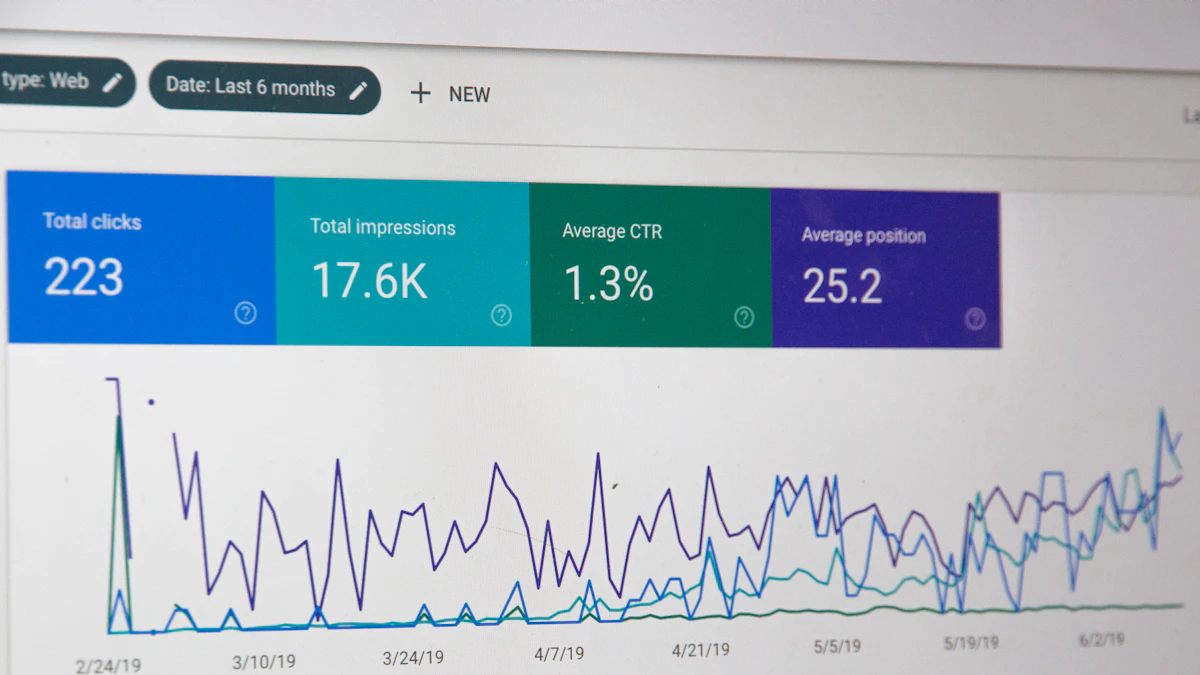
Build a dashboard around impressions and clicks by market, important query groups, relevant landing-page engagement, qualified enquiries, and conversion rate. For publisher campaigns, also track accepted pitches, completed placements, referral quality, and costs. Use a consistent date range and compare performance against a meaningful baseline. Ranking changes should be interpreted alongside content updates, technical changes, seasonality, and other marketing activity instead of credited automatically to one link or article.
Review the search query and page that generated each lead when this data is available. A smaller volume of qualified enquiries may be more valuable than a large increase in irrelevant traffic. Use that feedback to refine both keyword targeting and the publisher shortlist. The goal is sustainable market fit—not simply more impressions.
How do you verify the quality and metrics of your Arabic publishers?
We continuously audit publishers using Ahrefs metrics (DR, organic traffic), index stability, and spam scores, so you only buy placements on real, active, high-quality sites.
Are article placements permanent and guaranteed to be indexed?
Yes. Every placement is permanent: it stays live for as long as the publisher website is online, with no expiry date and no renewal fees. Many resellers sell cheaper links that publishers remove after an agreed period. We never agree time limited terms with publishers. If a publisher ever removes your article while its website is still online, we republish it, place it on an equivalent publisher at no extra cost, or refund you in full. Every placement also comes with a 100% Google indexation guarantee or a full refund.
What is the average turnaround time (TAT) for publishing?
Standard publication turnaround time ranges between 3 to 7 business days depending on the selected media outlet and editorial review.
Can PublishBridge handle Arabic content creation and localization?
Absolutely. Our in-house editorial team writes tailored Arabic press releases and articles, edited by native speakers and optimized for regional search intent.
Do you offer custom agency discounts or bulk pricing?
Yes, we provide volume-based discounts and custom invoicing solutions for SEO agencies managing multiple client accounts.
Stay Ahead in Arabic Digital PR
Subscribe to receive exclusive insights on MENA search trends, new verified publisher additions, and agency strategies.
Need a Custom Media Strategy?
Schedule a brief consultation with our Arabic Digital PR specialists to discuss your campaign targets and custom bulk pricing.